
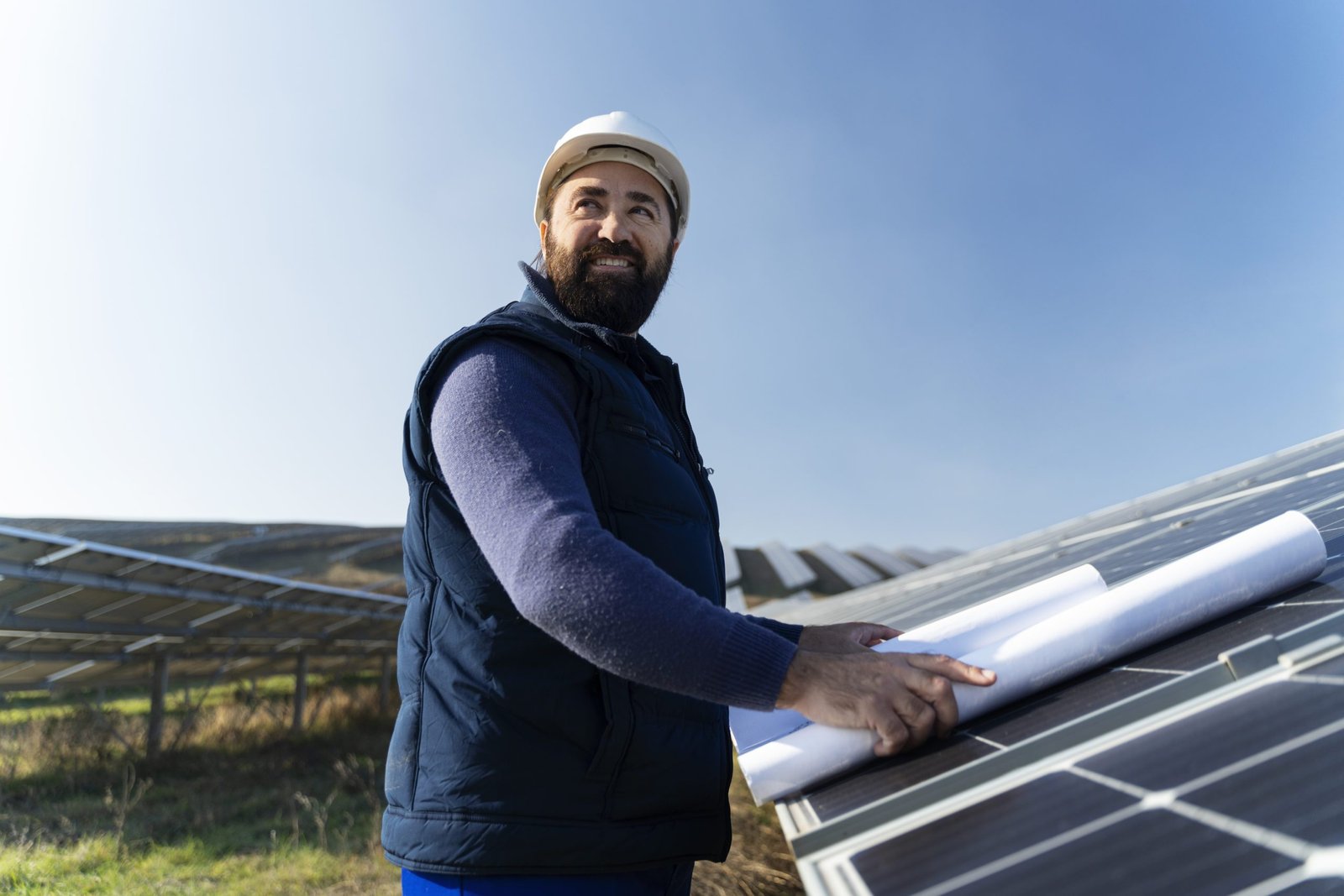
Turnkey Solar Installation Services
Offer turnkey solar installation services, handling every aspect from initial site assessment and design to procurement, installation, and commissioning. Ensure seamless integration with existing infrastructure, delivering efficient and reliable solar energy solutions tailored to client needs.
Construction and Installation
Manage all aspects of the solar installation process, including site preparation, equipment installation, and system commissioning. Coordinate with subcontractors, engineers, electricians, and other stakeholders to ensure smooth and timely project execution. Adhere to industry best practices, safety standards, and quality control measures throughout the construction phase.
Site Preparation
Conduct thorough site assessments and prepare the location for installation.
Ensure that the site is ready for the safe and efficient setup of solar equipment.
Equipment Installation
Install solar panels, inverters, mounting structures, and other essential components with precision and expertise. Utilize experienced installers to ensure high-quality workmanship and adherence to design specifications.
System Commissioning
Perform rigorous testing and commissioning procedures to confirm the system’s optimal performance.
Ensure the system is fully operational and meets all performance and safety standards.
System Design
Develop customized energy storage solutions, such as battery systems, to store excess solar energy. Ensure the storage system is tailored to your specific energy needs and site conditions.
Integration
Seamlessly integrate energy storage systems with your existing solar PV setup. Ensure compatibility and optimal performance through expert configuration and setup.
Optimization
Optimize battery sizing, configuration, and control strategies to maximize energy savings and backup power capabilities. Enhance grid independence by ensuring your system can reliably supply power during periods of low sunlight or high energy demand.
Energy storage Solutions
Design and integrate energy storage systems, such as batteries, to store excess solar energy for use during periods of low sunlight or high energy demand. Optimize battery sizing, configuration, and control strategies to maximize energy savings, backup power capabilities, and grid independence.
Construction and Installation
Manage all aspects of the solar installation process, including site preparation, equipment installation, and system commissioning. Coordinate with subcontractors, engineers, electricians, and other stakeholders to ensure smooth and timely project execution. Adhere to industry best practices, safety standards, and quality control measures throughout the construction phase.
Site Preparation
Conduct thorough site assessments and prepare the location for installation.
Ensure that the site is ready for the safe and efficient setup of solar equipment.
Equipment Installation
Install solar panels, inverters, mounting structures, and other essential components with precision and expertise. Utilize experienced installers to ensure high-quality workmanship and adherence to design specifications.
System Commissioning
Perform rigorous testing and commissioning procedures to confirm the system’s optimal performance.
Ensure the system is fully operational and meets all performance and safety standards.
System Design
Develop customized energy storage solutions, such as battery systems, to store excess solar energy. Ensure the storage system is tailored to your specific energy needs and site conditions.
Integration
Seamlessly integrate energy storage systems with your existing solar PV setup. Ensure compatibility and optimal performance through expert configuration and setup.
Optimization
Optimize battery sizing, configuration, and control strategies to maximize energy savings and backup power capabilities. Enhance grid independence by ensuring your system can reliably supply power during periods of low sunlight or high energy demand.
Energy storage Solutions
Design and integrate energy storage systems, such as batteries, to store excess solar energy for use during periods of low sunlight or high energy demand. Optimize battery sizing, configuration, and control strategies to maximize energy savings, backup power capabilities, and grid independence.